
Putting Creativity at the Centre
Thursday, 11th June 2026At Melbourne High School, we may occasionally blow our trumpet about all the famous musicians and actors and artists who have come through our doors. But we’re also keeping a keen eye on the rapidly evolving worlds of digital art and industrial design – and the incredible advances offered by the latest robotic systems, high-performance materials, and AI-assisted engineering.
The need for young ‘makers’ to appreciate and learn to use the latest design tools and software is the inspiration behind the MHS Foundation’s appeal to fund a vital upgrade to the digital fabrication facilities at the school’s Arts Centre.
The project will include three state-of-the-art Bambu Lab 3D printers, which will enable students to print and prototype a huge range of models and projects from various materials, plus two xTool P2S laser cutters, with the latest capabilities for precise cutting and engraving of wood, acrylics and cardboard. These smart machines will be installed with robust safety and ventilation systems, together with high-resolution digital screens to help students fine-tune and display their work.
Principal Tony Mordini says the equipment will not only bring the 20-year-old Arts Centre into the modern era – but will provide the impetus and inspiration for boys who might not have considered a career in the digitally-driven arts.
“As a selective-entry high school, we already punch well above our weight in our arts and humanities curricula,” says Dr Mordini. “But we’re always challenging ourselves to get our boys ready for the future and proactively connect our studies to real-life applications.”
Arts at the heart
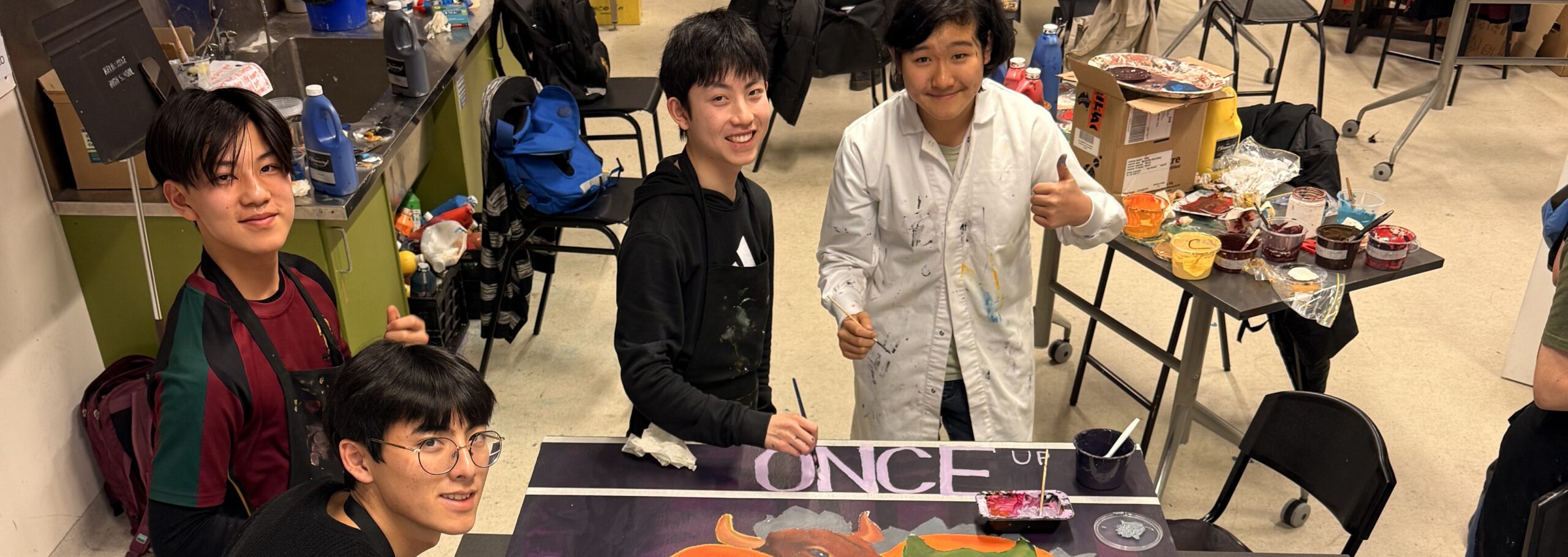
The focus on arts and humanities permeates every year of Melbourne High’s studies. In Years 9 and 10, there are multiple design, media, art, film, music and drama streams, with up to 60% of Year 10 boys this year taking on an arts-related VCE subject.
There is also a growing focus on design technology across the four years – particularly in Year 12, where the core Visual Communication and Design curriculum is supplemented by specialised streams such as software development, algorithmics, and industrial design. Dr Mordini is particularly proud of the after-school robotics club, which has nearly 200 members – four of whom are off to Seoul next month to take part in a global robotics competition.
“We’re very proud of the rich artistic endeavours of so many of our boys, but our current plan will boost our design capabilities even further, with a cutting-edge fabrication workshop that’s aligned with the latest industry best practice,” says Dr Mordini.
“Students will be able to create their own digital designs, convert them into prototypes, test and refine them, and produce much higher-quality VCE portfolios.
“This equipment will not only help boys who are considering careers in engineering, architecture, and industrial design – but will give every student in the school a unique opportunity to explore their creativity in novel, exciting and high-tech ways.”